“You should be focused on essentials like food, water, land, not internet connectivity!”
This was the feedback that Mariana Franco, executive director of Grupo Sunu, received from a funder when she proposed bringing internet connectivity, via the Nanum project, to Paraguay’s Gran Chaco region. But after I spent a week in the Chaco with team members from the Internet Society Foundation and Grupo Sunu — an organization that strives to bring greater respect and solidarity between different cultures and social groups — I saw firsthand how essential internet access is for the people who call this region home.
(While Grupo Sunu works directly with communities in the Chaco, this project was made possible through funding from the Internet Society Foundation, in partnership with TechSoup.)
Life in the Gran Chaco
The Gran Chaco is a lowland region in South America that spans over 1 million square kilometers (about 386,000 square miles), or about twice the size of California. It encompasses parts of Argentina, Paraguay, Bolivia and Brazil. Although vast, it’s one of the most sparsely populated areas in South America, with only about 7.5 million inhabitants, many of whom live in extremely remote communities.
The residents of the Chaco face many challenges, including deforestation, high temperatures, wildfires, and flooding, which can leave communities isolated for long periods of time.
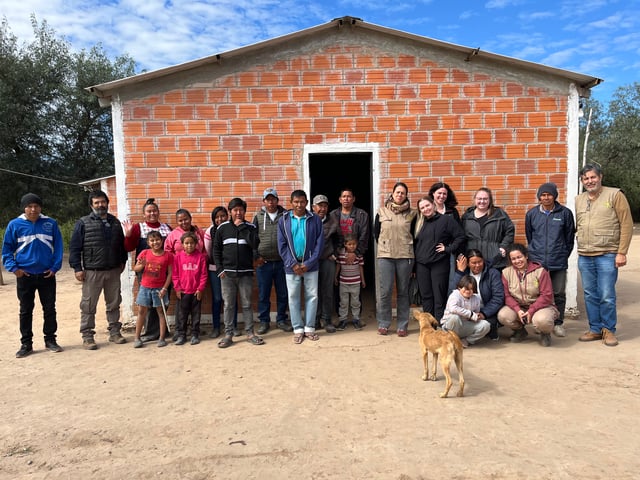
[Photo: Lia Benitez, Grupo Sunu]
Grupo Sunu participates in the Nanum project, a tri-national initiative between Argentina, Bolivia, and Paraguay that brings internet connectivity and digital literacy programs to isolated and indigenous communities in the Gran Chaco region.
The Grupo Sunu team has been visiting the Chaco region for over 20 years, learning about the indigenous communities’ ways of life and advocating on their behalf for improved services like healthcare, education, and greater connectivity to the outside world.
Improving Access to Information and Services in Loma
Our trip started with a 10-hour trip by SUV out of Asunción, Paraguay’s capital city. After many kilometers — and many rounds of yerba mate — we reached the Loma community, an indigenous community that now has internet access thanks to the Nanum project. When we arrived, children came up to greet our car, speaking in a mix of English and Guarani, Paraguay’s second official language.
Initially, Loma worked with Grupo Sunu primarily to get internet connectivity, as this was necessary to protect their ancestral territory and secure land rights.
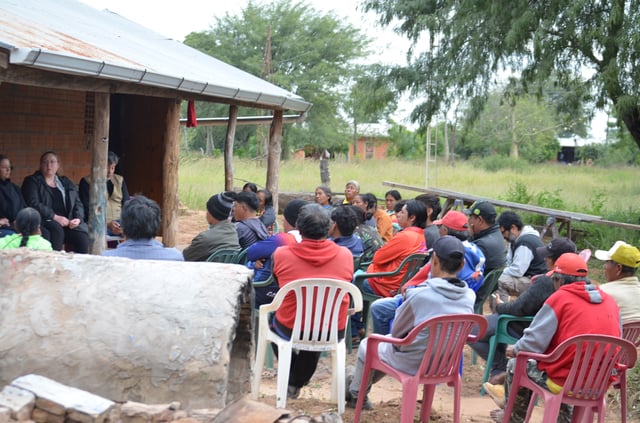
Connectivity emerged as a strategic pillar in safeguarding the traditional territory of the Guaraní Ñandéva people of Loma. Over more than 40 years of struggle, the community combined territorial defense, cultural continuity, and digital organization to make their voice heard beyond the Chaco.
[Photo: Lia Benitez, Grupo Sunu]
Through community-led digital initiatives — such as Loma Digital — and sustained advocacy, they strengthened alliances, documented their process, and amplified their demands. This long collective effort culminated in the definitive legal titling of their lands, a milestone celebrated across the territory and echoed through their digital platforms, where the community shares the historic achievement and reaffirms its commitment to protecting the land for future generations.
Building on this success, with funding from the Internet Society Foundation, Loma allows the community to update equipment and supports capacity-building activities. During our visit, village members discussed a challenge they are facing: A mineral mining and extraction company is now interested in surveying their land. Community leaders are using technology to reach out to other communities in their network to see if others have had similar issues, research updated information about land rights, and seek legal support in Asuncion.
The community also needed to be able to reach emergency medical services. Prior to getting online, community members had to walk 10 kilometers (about six miles) to reach a landline at a gas station. The phone wasn’t always available, and at times they were not allowed to use it. The cost of mobile data and lack of signal also presented a barrier.
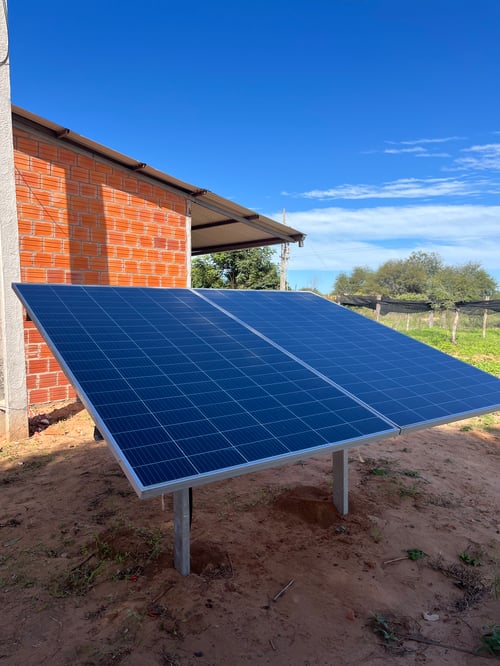
Now, the village of Loma is able to connect with other communities and vital emergency services. Grupo Sunu employs technicians to install Wi-Fi devices in shared spaces, like community centers. Many of the devices are run by solar panels, taking advantage of the strong sun in the summertime.
Improved Opportunities for Education in Yalve Sanga
The Abran Klassen school in the Yalve Sanga community has over 200 indigenous students in elementary and middle school. Computers and internet access now are available both to students and to members of the community after school hours. Funding from the Internet Society Foundation has helped the school purchase more computers, which students and community members can use for their coursework and for entertainment.
The Paraguayan government requires all schools to report student data through a government website, including standardized test scores and the utilization of school meals. Prior to internet connectivity, teachers had to use their personal devices and mobile data to access government education sites. Because of the Nanum connectivity project, educators no longer rely on personal devices to keep their school compliant with government requirements.
[Photo: Lia Benitez, Grupo Sunu]
These changes are opening up the community to additional educational opportunities. Currently, the community lacks a high school, and students who want to attend have to apply to boarding schools in larger towns. These schools have a limited number of seats available to indigenous students, so many Yalve Sanga students can’t continue their studies after middle school. But now that Abran Klassen is better able to report and track student progress, they will soon be able to offer high school courses.
Additionally, many of the communities that we visited are interested in using the internet to access higher education, a space that has traditionally excluded indigenous people. In Santa Rosa, a village on the outskirts of Asunción, a young man told us that remote learning allowed him to finish his studies that he had started in person at the beginning of the COVID-19 pandemic. Now, others are exploring opportunities to take free college prep courses online. They dream about sending young people to school to learn about nursing, technology, and law — skills that they can bring back to their community.
Connecting Communities Across Gran Chaco
In addition to connecting with larger institutions, internet connectivity also allows Chaco community members to communicate with each other. Discussing topics like agriculture and handicraft production over tools like WhatsApp and Microsoft Teams allows producers to coordinate on selling and pricing their products. During the COVID-19 pandemic, these tools also allowed people to check in on each other and catch up on news.
Chaco residents use the Internet for the same things many of us do — checking the weather, connecting with friends, and researching how to fix vehicles and household items on YouTube. In Loma, residents said that they have a community Facebook page for news and use tools like Excel to keep census information about births and deaths in their village.
Many communities are still considering the effects of connectivity. In some villages, internet access shuts down in the evenings in order to prioritize mealtimes with family. Other community members expressed their concerns with the internet’s effects on young people. While they recognize that it is important to use technology, they also want to keep an eye on how young people are doing online. While Grupo Sunu provides digital literacy training, they insist that communities need to determine guardrails and the best use of internet.
Looking Ahead
During my visit; I wondered what the rest of the world misses out on by not knowing the Chaco. Indigenous language, stories, and knowledge are at the heart of this region and are not widely shared beyond the Chaco. Grupo Sunu is now working to teach community members how they can share their stories. Even in the smallest villages we visited, we spoke to aspiring content creators who are sharing their life on social media. While Grupo Sunu brings connectivity to communities, it’s exciting to see what communities in the Chaco can bring to the rest of the world.
Kathryn is a Senior Manager, Fund Management, at TechSoup.
Due to the sensitive nature of its work, the Grupo Sunu team reviewed this post to verify factual information presented in it.